Showing posts with label osteogenesis imperfecta. Show all posts

Thursday, 12 November 2020

walking

We have been encouraged to take exercise throughout this pandemic, for the good of both physical and mental health. Since buying a fitness band when I was still in work, I have made a concerted effort to increase the number of steps I do each day, when not constrained by higher levels of pain or exhaustion than normal. My first target, back in around 2017, and still deskbound, was 2000 steps a day. It has built since then to the point where I regularly reach my 5000 a day target and occasionally go well beyond. That won't sound like much to anyone with any sensible level of fitness, but for me it is an achievement, and tells me that I can probably manage more as long as I keep pushing, remain patient and accept that sometimes I won't even mange half those 5000 steps in a day.

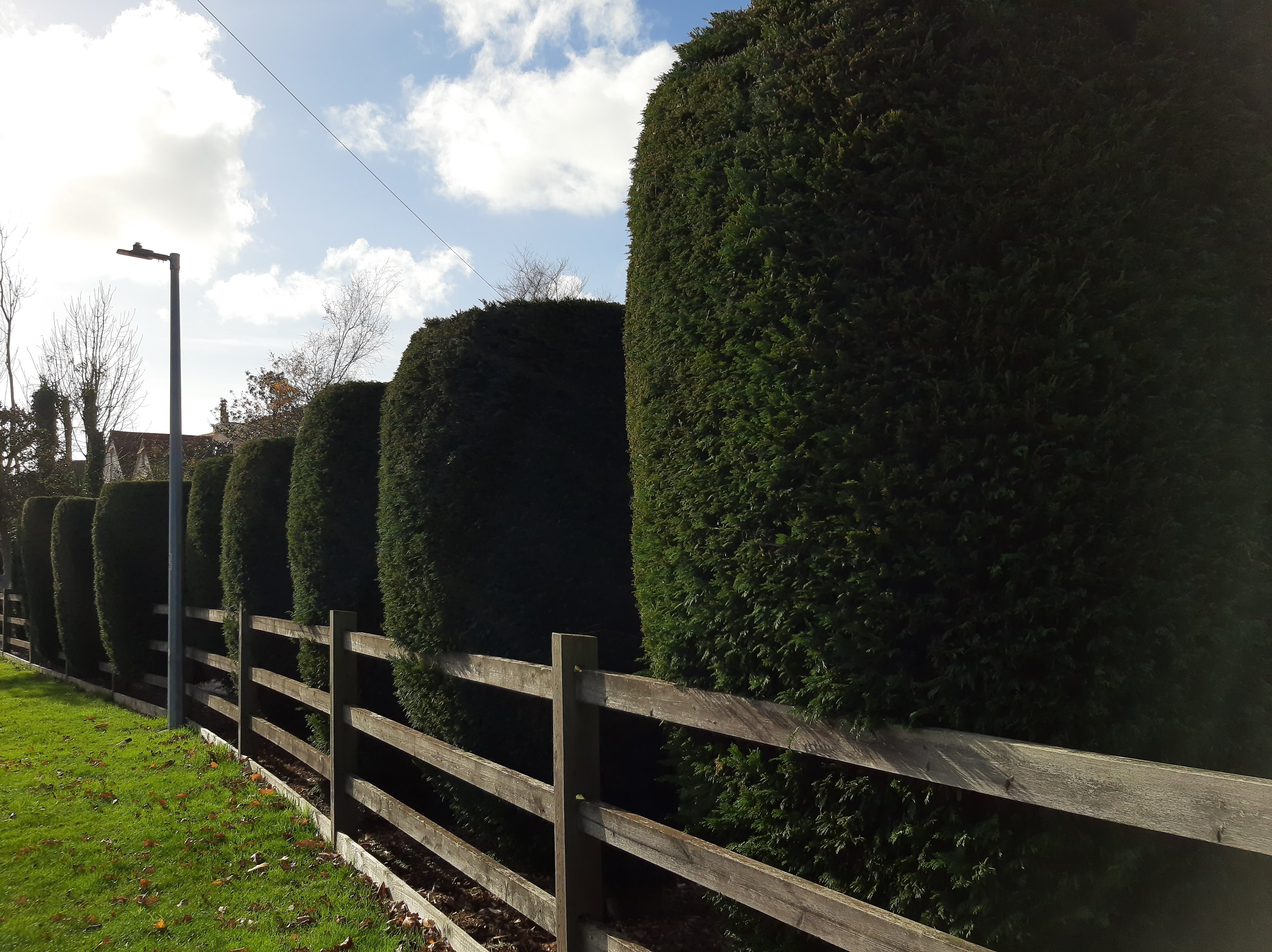
We are fortunate where we live to have the sea within walking distance, and also very benign suburban streets where one can be aware of birdsong, the wind shushing through a hedge, low raking sunlight illuminating the leaves, and all sorts of interesting gardens to peer at. 


sunny skies or windy, the sea is always good to watch


there are fairies and gnomes of you look closely, I wonder what it's like when the lights come on!


There are so many interesting things to see when you are looking.

With the good of my health in mind, and with the help of the fitness app, I can now set myself distance targets and have managed nearly two miles on two different days. A long walk for me, with the occasional stop for breath catching and general realignment of aching bones! 


Sunday, 14 April 2019

Time together

Courtesy of Google Maps
This week I had the pleasure of spending a day and a bit going to London with my beloved daughter. We were visiting the National Hospital for Neurology and Neurosurgery, in the service of investigating a whole series of hidden but debilitating symptoms; tachycardia, extreme fatigue, dreadful giddiness and the like, with which am very familiar as they are part of having an inherited connective tissue disorder. In Jen's case this is exacerbated by dyspraxia. We were seen by a delightful consultant, and I was able to help fill in details of family members affected, going back six generations. I was also able, by being there, to learn from the consultant more about how better to manage it, as I too have the condition.

It was lovely spending time with Jen. We live in the same town, so see each other, regularly, but going away is different. We went up Wednesday evening and spent the night there. She crocheted and I sewed on the way there and back. We talked about life and the way of living it, had smiling interactions with fellow travellers on our journey, people watched with mischievous pleasure.

Had Jen felt well enough while in London, we would have gone to the British Museum for a mooch and lunch after her morning appointment. As it was I was happy to be there to provide an arm for balance and leaning on as we navigated the mad whirl that is our capital city, with hurrying folk whizzing along in the Underground; talking business in Pret; striding down the pavements; people who would not understand her frailty. I used to have the same feeling when out with Mum, who was badly affected with brittle bones, an element Jen and I have escaped, but also invisible to the onlooker.

We came home by train in the afternoon; both exhausted and painful, but carrying on because what else can you do with a life limiting condition? It is a short walk from the station to her home and she was happy not to wait for my lift, so we hugged and parted. As she walked away I could see her swaying steps, hand out for balance, the occasional slight lurch. To passers by, a quick glance might prompt some dismissive though about lunchtime drinkers waving their way home.

I know that there goes my brave girl, getting on with life.


Friday, 15 August 2014

Living with fragility

I'm not sure if I've talked much about the way my family's brittle bones have shaped our lives, but an incident today reminded me. Cecil, who has come to be near me, was taken by one of the carers for a first visit to the doctor this morning. She tripped and fell onto one knee on the way back. The knee was bruised - a not unusual thing for an elderly lady, but no lasting harm was done. It was being ice packed when I arrived and she was quite happy to come out with me after that.

I realised later, what a curious pleasure it was for me not to have to worry about broken bones. For all of my life, so long as Mum was alive, from my first steps, every tumble has been met with the anxiety that something was broken. During my childhood, this was Mums major fear since, for her, every childhood fall resulted in breakages. I was frequently asked, with great anxiety, can you wiggle your toe? move your arm? articulate whatever limb had been hurt. Then I grew up but she reached menopause, and began to break again so, once more, every fall was a crisis. I truly have spent hours in A&E, sitting beside her, hoping her pain was not too great, as some limb or other had been broken. I have been lucky enough to escape the brittleness, though not the entire effects of having a connective tissue disorder. Cecil has escaped entirely, her mother taking after Nanya, 

unlike my grandmother, who took after Howard, whose fine featured face gazes at me in my study. 


So poor Cecil is bruised, but not broken, and could take a walk with me along the seafront for coffee and cake. We had a fine time but I am always careful to make sure she holds my arm unless on very steady ground - a habit learnt with Mum. I hook my left elbow; we say, in unison, "take my arm and call me John", and off we go.

Tuesday, 11 June 2013

were you afraid of elastic bands?

This was a question I nearly managed to ask my daughter today.

I was having a conversation with her about the elements of fragility in my family that were part of "normal" life in the world I grew up in. We all have osteogenesis imperfecta to a greater or lesser degree, inherited from my great grandfather. This can result in desperately brittle bones, from which thankfully I've been spared. However, my childhood (as an only child) was liberally sprinkled with little incidental alarms like

"don't lean over the arm of the chair like that!!! Auntie Connie cracked a rib doing just the same"

"I was just picking a book up Mum!" 

No matter, in an extremely small family, having four "very breakables" in three narrow generations does tend to lead to a particular family sensibility. Living with both my mother and grandmother, and only them, tended to distill this aura of impending calamity - I won't even begin to dwell on the dentist horror stories! So, life was expected to be painful, to involve broken bones in all directions and, for a rather small child, this made elastic bands - yes even the innocuous elastic band (remember the incendiary hot water bottle) a source of some disquiet. Yes, I confess, I was afraid of elastic bands! They might flick you in the eye, slap their nasty, smarting little rubber selves against your fingers, snap with a sudden and alarming twang! I avoided them when at all possible. However, I have to confess to dissolving into giggles before making it through my question to my daughter.

Being afraid of elastic bands is, surely, too ridiculous for words?

Saturday, 19 November 2011

What Impending Catastrophe? Retrospective

Driving home from work recently I was passed by an ambulance, lights flashing, careful driving, carrying some poor soul to the hospital I guess. I was tired, it had been a long day, but I was quite startled to find tears flooding down my face as I drove on. For many years, this quite commonplace sight, along with the sound of sirens, heard but not seen, brought me a sense of dread. It is the inevitable side effect, I suspect, of being responsible for the care of a fragile soul. Mum started breaking bits if herself when my daughter was about four. She had been extremely fragile in childhood, then began to be once more, post menopause. It started with an elbow, which wasn't too bad but made opening Christmas presents that year rather a task. The breakages increased over the next 20'ish years to include leg, pelvis, sternum, fractured spine, neck, skull, and finally hip, which was the one that she simply couldn't recover from. Each of these breaks involved endless hours in casualty, hospitalisation, and quite a bit of my support once she got home again. During this time I brought my daughter up and looked after my mother in law with Alzheimer's for four years, a dependency that also involved several trips to casualty and, once,  her return by some very understanding policemen, in the middle of the night, in nothing but her nightie. Oh, and a first class honours degree from the OU and the transformation of my life.

My daughter is nearly 25 and living her own life, Mum and my mother in law are gone; the need for me to care has stopped - for now. Yet this flood of tears made me realise that, inside, the constant anxiety, the anticipation of disaster, has become so ingrained that, unwittingly, I am still there in that emotional space, suspended between the last hospital visit and the next, waiting to be needed again. It was a sobering thought and made me wonder how one gets beyond such deeply ingrained responses, grown over a period of many years. Yet isn't that how life is for all of us? We live in a world that requires things from us, and in which things happen to us and, for the most part, we react instinctively. Things good and bad draw responses from us, responses we often don't think about or question. It is as though our souls learn to generalise, cease to be in that childhood state of newness where each thing in a wonder and each event fresh and untried. These instinctive, unregulated reactions to life are often a source of compassionate action, of laughter, of pure delight. They can also be the source of bigotry, hate and misery. If we have a bad day at work, or someone is unpleasant to us, our response to that can lead to more misery. We may snap at a shop assistant because we're feeling grumpy, fail to see a loved one's need because we're still rehearsing the nasty thing that man said this morning.

For me, Mindfulness is a way of trying to mediate these reactions. If we take the time to watch ourselves, not in a self centred me, me, me way, but in a spirit of investigation and of letting go, hopefully we find ourselves questioning that stab of irritation, realising that perhaps the person who has just been unkind may be having a really bad day themselves. They are simply people, not the enemy, and letting go of the negative response allows us to move forward in clarity, dropping the inevitable reaction at "them" and leaving it where it belongs, in the past. Now is always now, the past will always have happened, but we can encourage ourselves to leave the bad things there. How this helps with my impending sense of catastrophe, I'm not entirely sure. It is so ingrained I am mostly unaware of it, other than as a constant disquiet whispering in the back of my mind. However, I shall try. I know when I am old, it will be my dearest wish that my daughter is not burdened with my care. I also recognise what a deep and welcome gift caring for Mum proved to be. She would not want me to still be anxious, just as I would not want Jen to feel this way. With awareness may come release.

Wednesday, 18 May 2011

mindful body

One of the things I keep thinking about,and feel I could blog about, is living this life of mine, in which I have to manage constant pain. Because that is simply how my body is. I can't remember having no pain in my body, ever, though I know I must have as a child. 

We have a genetic condition in the family, which we inherit from Howard C Rowe, my great grandfather.

Howard C Rowe

In most of the slim strand of women descended from him, it manifests itself in very brittle bones.

My lovely Mum,
Mum with Dad in their youth
 dear Ganna, my second mother, once Dad was gone
Ethel H Lomer, nee Rowe
Great Aunt Connie, whom I barely remember, but whose strong personality lingers in family tales
A Constance Rowe
all had this life inhibiting fragility. They fell, they broke. Simple as that.

I and my daughter Jen, who is 25 this year, are the lucky ones, we don't break. But we do hurt. If we jarr our bodies, we often injure muscle or tendon and that takes forever to heal. If we leapt slightly awkwardly as children, we tore, or bruised really badly. For years I have been restricted to nothing faster than brisk walking pace, I know a muscle may tear if I move more quickly. But our bones don't break, which is a Good Thing.

And I still have dreams about running!

This does mean, though, that we hurt most of the time. Not screaming agony type hurt - though occasionally it gets a bit exciting, just nagging, every move you make, grinding sort of hurt, day by day, in all the usual suspect places. So we have to manage it. I try, each day, to keep part of my focus on moving in ways that minimize the damage. I try to hold this focus not in a life restricting way, but accepting that there are things I simply should try to avoid doing. I absolutely exclude gardening from this list of things, but I garden very carefully, as I've talked about before!

There are also things that I, that anyone can do, to support this fragility. I took advantage of training offered by the local physio department on using core muscles to support bad backs. I listened and carried the advice away into life, not enough admittedly, but some. I focus on supporting movement with those muscles, as often as I am mindful to. Simple things like getting out of a chair, tying a shoelace, benefit from this sort of focus: from remembering to cradle the back carefully with those muscles, just before you move. Things which we often do mindlessly, I try to be mindful of.

The mindful bit comes from Buddhism, from the writings of various good souls much wiser than me, and is about recognizing the value of being alive, and trying to use the hours, minutes, seconds, that we are truly awake to, in a meaningful, life affirming way. remembering that even though your back is really, really sore, there are still good things to notice about simply being alive!

I could ramble more about this - I'd rather not preach - but I may return to it from time to time.

Tuesday, 8 February 2011

Do we all become orphans?

I had an interesting chat today with two good souls, a mother and daughter team, who run a knitting shop near where I work. More than just knitting, there is sewing, crochet and a weaving class that I’d love to join if I can allow myself to. I walk past this shop when I leave work each day – imagine the temptations! However, in amongst the crafty chat there was deeper thought. We found ourselves talking about losing loved ones, in this case our parents. The mother, whose name I don’t yet know, lost both her parents four years ago. I lost Dad when I was 7, then my dear Ganna, who had become a surrogate parent, when I was 21 and finally Mum last year. We pondered on the way that this loss touches us daily, little things that might trigger emotions that veer between a soft, aching sorrow and an overwhelming need to “rage, rage against the dying of the light”.
Mum was a daily light in my life, despite all the trials that come with caring for a strong willed woman, who was progressively losing her connection to reality. I would go upstairs knowing that her deep blue eyes would fill with unconditional joy as she realised my presence. We argued at times, at times she could be dreadfully difficult, and the anguish of watching her get lighter and lighter as she ceased to eat, convinced that she’d already cooked herself a “lovely lunch” was at times too much to bear. Yet each day this shining smile would greet me, blue as the sky, bright as the sun. All my life I understood that she was “fragile”, though we didn’t realise the nature of that fragility until I was diagnosed, in adulthood, with the same condition, in diluted form. As a child she broke bones with frightening regularity, as had her mother, aunt and grandfather.  She started breaking again once menopause set in, first a finger, then an elbow, a knee smashed to smithereens, her pelvis, sternum, spine, skull, neck. I watched her little body gradually crumple and deform as Osteogenesis Imperfecta added inexorably to the normal loss of bone and muscle that goes with ageing. Yet through all of this her soul remained gloriously strong, her smile generous and her sense of fun undimmed. She was my inspiration. And now she is gone just as, in the natural order of things all our parents go before us “into that good night”.
So we women, chatting in a small shop in Hastings, pondered on this loss and the way in which we felt, despite our years, orphaned. The dictionary defines an orphan as a child whose parents are dead. But do we not all feel, from time to time, helpless as children, frightened by the demands of life, intimidated by the responsibilities we expect ourselves to bear? I know I do, and have often in the past. Yet we put on a brave face, rarely answer the query “how are you?” with true replies, understanding the shallow nature of this reflex social patter. Why can we not feel orphaned, even as adults, when the person who has been our benchmark in life has gone forever? I miss Mum every day, in scraps and starts, between the contingencies of living. She is a hollow place in my heart. I know my daughter misses her beloved grandmother too – as I did when Ganna died. We feel bereft, while understanding that this is the nature of being. Our only certainty in living is that we will die; the only true, mindful response to this is to live our best lives while we can. But in amongst this trying and accepting, understanding and letting go, perhaps we could allow ourselves to be orphans once in a while. Perhaps that is natural response, at any age, to this inescapable loss.