Showing posts with label mindfulness. Show all posts

Thursday, 12 November 2020

walking

We have been encouraged to take exercise throughout this pandemic, for the good of both physical and mental health. Since buying a fitness band when I was still in work, I have made a concerted effort to increase the number of steps I do each day, when not constrained by higher levels of pain or exhaustion than normal. My first target, back in around 2017, and still deskbound, was 2000 steps a day. It has built since then to the point where I regularly reach my 5000 a day target and occasionally go well beyond. That won't sound like much to anyone with any sensible level of fitness, but for me it is an achievement, and tells me that I can probably manage more as long as I keep pushing, remain patient and accept that sometimes I won't even mange half those 5000 steps in a day.

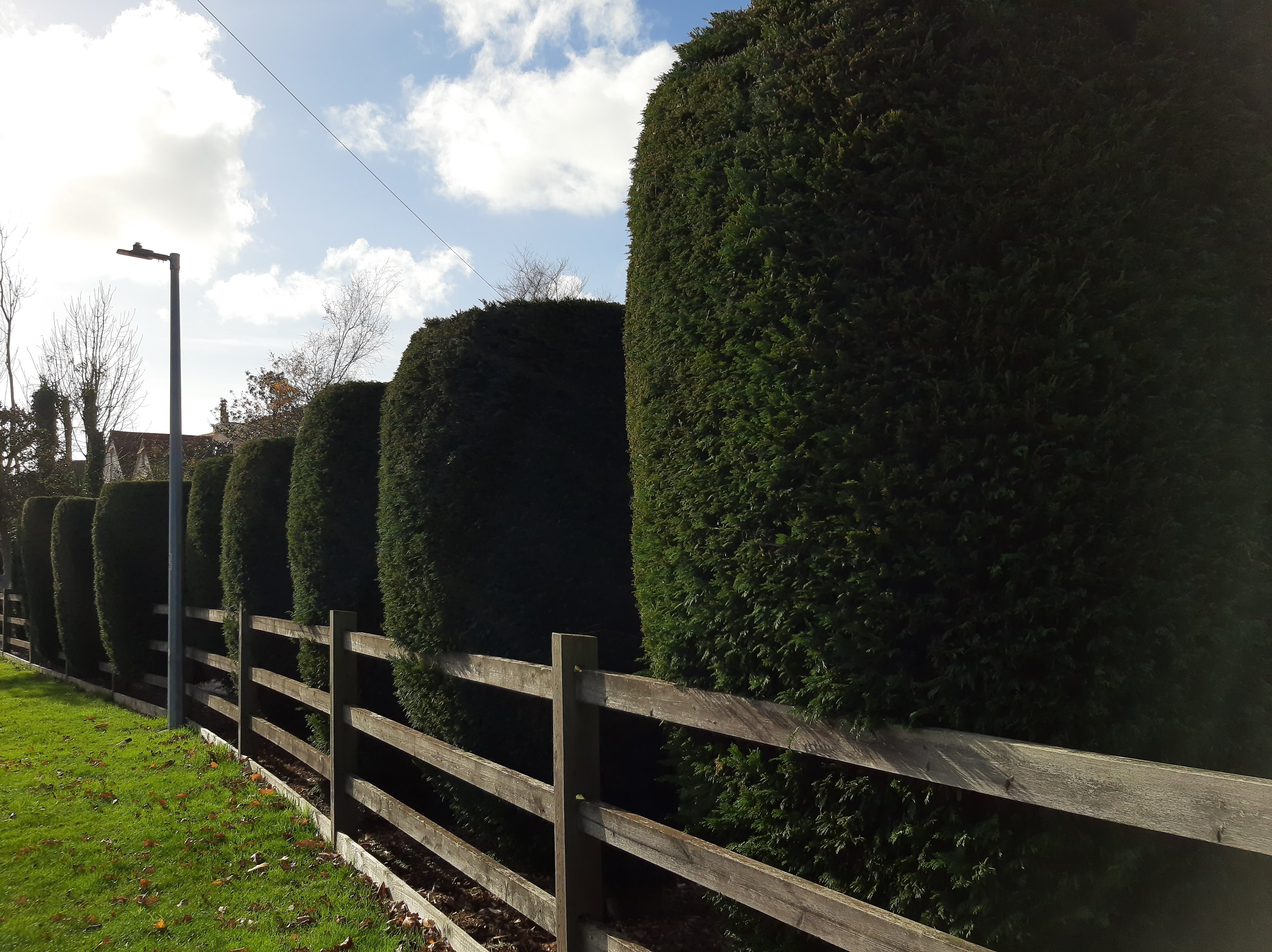
We are fortunate where we live to have the sea within walking distance, and also very benign suburban streets where one can be aware of birdsong, the wind shushing through a hedge, low raking sunlight illuminating the leaves, and all sorts of interesting gardens to peer at. 


sunny skies or windy, the sea is always good to watch


there are fairies and gnomes of you look closely, I wonder what it's like when the lights come on!


There are so many interesting things to see when you are looking.

With the good of my health in mind, and with the help of the fitness app, I can now set myself distance targets and have managed nearly two miles on two different days. A long walk for me, with the occasional stop for breath catching and general realignment of aching bones! 


Wednesday, 25 March 2020

Rainbows

There’s a wonderful notion here in the UK, in response to the epidemic. Folk are creating rainbows and pinning them up in their windows so that passers by can be cheered. I love the thought, but at the moment people are, in theory, not going out except for essentials. So I though I’d share some of the rainbows that I live with.

They can be made by the sun, briefly captured by the wall


Or gently illuminating cloth stitched in India


They can be woven in Peru


They can have little birds flying across them


Or they can be made of cloth or glass and shine in the window by sunlight or lamplight


Because when the clouds are dark, if you can see a rainbow you know the sun is behind you. Sometimes we need rainbows to pull us through.

Sunday, 22 March 2020

Strange times

In these curious times there are many things to be thankful for, and perhaps the sense of threat heightens that feeling. We are in the lucky position of having stopped work, so have the freedom to say, lets just stay at home and do "stuff" and just go out when we need some shopping. Admittedly that does mean one of us is in the "at risk" category because of his age, but that's just more good reason to stay at home.

We both take great delight in our garden, which has grown and changed quite significantly since we moved here in 2010. We have dug and planted, and had a number of very splendid folk in to help us with the proper business of landscaping. When we moved here we both felt that we wanted to give the garden time to tell us about itself; to reveal where the sun would lie in summer, to show us where previously planted bulbs are happy to see the light again and, most importantly, what wildlife we might be sharing it with. The consequence has been a slow transformation, one project at a time as strength and finances have allowed. The first priority for me was to transform the horrible shingle desert in front of the house into a garden that passers by could enjoy and which makes me smile every time I walk outside.


The back garden has acquired a productive area with greenhouse and raised beds - the badgers were particularly pleased the first year the Man provided ready to dig carrots!


The upper space has grown a pond, and much better walking areas. Despite being on top of a hill it gets extremely wet in rainy weather, and the water lies. We've had slate walkways carved into the grassy area over the past two years, that on the left the most recently completed.


the pond was added


and the garden has acquired the sense of something you can progress through; walkways lead to steps, or paved areas and flow round the top space in a very satisfactory manner. Most recently the latest stage of our garden transformation was completed.


I ponder and bask in this new seating area, a combination of fresh and reclaimed materials, with the flow and splash of the pond soothing me from across the grass,


As I listen to the birds in the many trees that surround me I feel deeply thankful to have such a treasured refuge in which to wait out this crisis.


What brings you pleasure at this time?

Friday, 19 April 2019

Memorial

I went yesterday to the funeral of an old friend, from a long past life. I haven't seen or spoken to him for probably twenty five years, though I have stayed in touch with his family via FB.

We all knew each other in the days of Jen's early childhood, meeting when they brought their children in to the library where I worked, seeing each other regularly for a number of years, finding common ground and interests. Jen was the same age as their youngest, Jamie, and she adored his two older sisters.  We were good friends at a difficult time of my life but as often happens, our families drifted apart, each overburdened with the challenges life sometimes brings.

Seeing his lovely children grown with children of their own, hearing their moving tributes to their Dad, I was caught up in long ago memories of warm summer weekends; the children playing together somewhere in the evening air as Mon, Pete and I chatted about life, and how best to live it, or  wandered in the bee buzzy garden, examining small trees, bean rows and the grand compost heap. I gained so much from our friendship and am deeply grateful for it.

My love of slow trees is one legacy of those garden chats; Pete picking up one of his trees in mid October, and blowing vigorously so that a few more precarious leaves dropped, turning to me with his wonderful grin; "see, it's Autumn".

These trees were all planted or gathered from the wild then,

The beech not yet showing buds


guelder rose, hiding holm oak and birch


gnarled roots witness time's passage


delicate branches


This rowan was gathered from the wild back then. It lived as a slow tree for many years, and was finally grounded when we moved here. Left where it was, right at the edge of the footpath, it would have been trampled into the ground. It likes this sunny spot and gives the local birds flowers and berries as the sunlight flutters in its leaves.


Our ruminations also developed thoughts about mindfulness and how to live a meaningful life; about how children could be treated, cherished, nurtured in a kinder, less pressured world. There was a quote yesterday from Thich Nhat Hanh, a Buddhist monk whose writings fostered my engagement with the philosophy. As life has become more physically painful for me, that philosophy has been so valuable. Another a legacy.

And today, this time of year, is ripe for reflections on loss and living; how often we don't recognise the preciousness of now, and the people who surround us; the wisdom of reflecting on the treasures life has already offered us; a point to pause and breathe and just be with what life is.

Thank you Pete, and Mon xx

Saturday, 4 April 2015

Mindfulness and The Voice

We all have an inner Voice; inner conversations and trains of thought going on as we go through life, often telling us what we should be doing, or being critical of ourselves, or others. Mindfulness teaches us to observe that Voice, dispassionately and compassionately, asking ourselves, would I say that to someone I really love? 

When we see this, we can begin to let it all go; this inner tumult of if only, why didn't I, but he said, I'd rather be, why did she .... why .... Little conversations, little nothings; thoughts hopping around in our head, like the grasshopper, monkey mind which cannot sit still. Mindfulness practice helps us to take a step back; to observe, rather than inhabit, this play going on in our heads. As we daily begin to see it for what it is, we see that we have a choice. We either struggle, trapped by this turmoil in our heads, or we become present in the life we are living. 

Wednesday, 11 March 2015

Thursday, 26 February 2015

Striving, with some result

I am still struggling to pull myself out of the doldrums. Partly the winter, I think, and partly the result of a number of years, rather more full of stress and striving than are good for the human condition. A long tale and I won't bore you. I am trying to gently coax myself into a daily habit of meditation and mindfulness - both of which I have practised on and off for many a year. This to run in tandem with a six week stress release course to which I have been allotted. Sadly, as with all my strivings, their more off than on nature has resulted in a great sense of failure and that horrid little whisper at the back of the mind that says "you're gonna fail again y'know". Do wish she'd shut up!


These sea ripples, captured recently, remind me of the mind's untempered behaviour. Thoughts poke up above the surface of the hoped for meditative calm and before you know it, off the mind goes along one flow or another, carried to another place entirely, until you notice and draw it back to the peaceful place again, and again and again


I have managed four days in a row to spend a brief period of meditation each day and, perhaps, if I confess here, it will prompt me to maintain the habit a little longer than in the past. I would like to find myself on a shore where a daily practice brings me to a greater balance and equilibrium. My comfort is this - at least I'm still trying :-)


Saturday, 2 March 2013

When "I" arrives, show her the door!

An odd thing to say, in fact it sounds rather unfriendly really, but I find (oh drat there she is already) that so often, when we find ourselves thinking thoughts beginning with "I" there's bound to be a negative there somewhere. We have a disagreement with a friend - off we go afterwards thinking "if only I'd said ... that would have shown him"; we don't have these inner conversations when we have nothing more to add, only when we're trying to put ourselves in the right. Or we might be talking to someone about a problem they're having, "ah, if I were you I'd ...". But we're not them and however well meaning, we can't live their lives, only our own. Likewise, there are the little inner dialogues we have about ourselves; those imagined dramas in which we are central. We might ruminate over what we'd do, had we been involved in some terrible circumstance, the right thing of course, which saved the day; or we dwell on some frailty of our own, possibly physical "I'm so tired of hurting all the time", or perhaps psychological "I shan't try that, I'd be useless/a failure". Then there are the great plans we have for ourselves, those things we are going to do when, if, before, after. All the time we're thinking about them, well, we're not doing them, but we congratulate ourselves on the fantastic outcomes, in fact, sometimes we can become so pleased with ourselves that we actually forget that we've not done anything yet! It is a very human thing to do, and we live in a society that seems to encourage this more. The cult of celebrity is surely the most obvious manifestation of the importance of ME, while endless TV adverts tell us we're worth it, or persuade us that if we just had this car, or went on that river cruise, our lives would be wonderful. They place our neediness centre stage and assure us that this or that product will satisfy.

Hmmm, I'm not sure sure. I have a feeling that, each time we focus on this "I" that we so fervently believe in, we risk compounding life's difficulties. Those thoughts we have about what we'd have said to our friend or lover - surely these colour the next meeting; carry the disagreement deeper into the relationship, yet leave the poor soul no space to explain or defend. The well meaning advice is really more about us thinking we know best than about trying to understand that person's difficulty. As for all those inner dialogues; well, they really don't help at all do they? Those great plans and grand actions have a rather hollow ring, and can lead us to feel rather too pleased with ourselves, yet oddly empty. The misery dialogue focuses on just one aspect of the richness that is life, throws a gloomy shadow over our inner selves, leads us to believe that this pain, that frailty are the whole story of our lives, rather than a little part of them.

This isn't a new thought, I don't think I'm saying something clever here, or something that's not been said a thousand times before, by people more qualified than me to say it. It is at the heart of many philosophies, religions, self help books and counselling sessions. It's ubiquity shows how deep and lasting a quandary it is for we self aware animals. Yet we forget: time and time again we start the day with "I", placing this virtual mirror between ourselves and our lives, gazing into it with loving attention.

The path of mindfulness is, to my mind, a helpful way to move beyond this. It can seem like the same self obsession, watching the moments of one's day with loving focus, trying to be present in full at each opportunity life gives us. But the approach is quite different; it can help us notice when that "I" crops up and gently, kindly turn the tumbling mind to another route, one that looks outwards, free from self regard, seeing more of the life that is living, and less of the inward fantasies. It allows us to listen, really listen with our whole attention, rather than leaping mentally to the clever response we're preparing. It acknowledges the fantasy person we believe ourselves to be is just that, a fantasy, transient as dandelion seeds floating on the breeze.

It is not something I talk about, or write about often, that feels too preachy to me, and in my youth I seem to recall I was a rather preachy person; I hope I am wiser now. But I do try, each day, to look more and more out, and less and less in. I hope I am beginning to get the balance more on the side of life and living, I know I have a long way to go, but the journey is the important thing.

As for those ever longer advert breaks - well, when they turn up, I just hit the mute button, look away, and use the time for something better!

Wednesday, 27 June 2012

Roads

I've been driving about today, some training to deliver in Rye, then a meeting to attend in Lewes. I was thinking about roads because there is a sort of bypass planned locally - which doesn't seem to bypass much and consequently seems rather pointless. However, I'd had a conversation about it with a friend who was bewailing the march of concrete across the countryside and condemning roads full stop. I wonder if he's taken the time to really look when he's driving round our lovely county. I watch and watch as I drive from A to B, part of a mindful approach to life. Not in an irresponsible way, you understand, just feasting my eyes on little glimpses, in between paying "due care and attention". What did I see today?
Well, the backdrop was the Downs, which I have known all my life, rolling placidly along the south coast, gently turning their shoulders against the sky and appearing in my Grandmother's novel "...Glory Down crouched above us, a lion couchant ... wrapped in its own strength". Today they were particularly wonderful, the sky was low and low cloud - or perhaps rising fog, was spilling over their tops from the direction of the sea, just held at their peaks, but tumbling over where the folds in the hills allowed it to flow. Our Long Man was shrouded in mist and mystery. As I drove, as well as watching this marvel, I noticed in the verges and hedgerows; pink and white arching sprays of and clusters of dog rose, flat topped yarrow, native source of achillea which we so love in our gardens, spreading sheets of ox eye daisies, rosy mallow and shining  buttercups, tall stands of cow parsley, ragwort, corn poppy, a long spill of vipers bugloss, shining blue blue blue and telling a tale of seed scattered in the slipstream, and woven all in between, the rippling gold of grass waving as I passed by. All of these thrive at our roadsides because the land is of no use. We forget as we drive past our green fields that, lovely as they are, they are there because humans use them to grow - plants, animals, something to eat. They are a Man made landscape. In the verges, the interstices of modern travel, there is no space for growing and so nature can thrive, undisturbed apart from the occasional mowing to maintain safe visibility. With more recent policies on roadside planting, native trees and shrubs are installed, outgrow their protective plastic collars and reach up to the sky beside the rushing traffic. All year round I watch this wonderful parade of colour, delighting in it and remembering my much younger self, leafing wistfully through the Flower Fairies, believing that all these lovelies were things of a bygone age.
Yes, I rather like roads - they give nature a slender strip of unfettered space.

Monday, 19 December 2011

while I was sleeping


the frost came and transformed the view from my window that I love so much. This doesn't really do justice to the soft yet rich palette of morning colours. Most of the leaves have been carried off by recent winds; those that are left are wonderful shades of maroon and gold, a symphony of harmonious singing shades, softened by early mist.

Sadly, while I was sleeping the previous night, my back seems to have fallen out! I was woken in the dark early hours by what I can only describe as a sense that something inside was gradually opening, like a dark night flower, and spilling pain in a radiant glow from the centre of my spine. Planetary rings, hot and flowing around my core. It took my breath away, I had to brace myself while it ebbed and seeped through me. I managed to turn onto my back as that is usually the best way to help the pain subside. It was dark outside, and cold inside, so I lay until dawn came, holding myself against the discomfort, longing to move yet dreading it. I was staying with my very dear, but memory deprived Aunt, and didn't want to wake her. Eventually it was late enough to crawl out of bed and be made a cup of tea amidst many protestations and offers of help, repeated many, many times!

I managed the two hour drive home, not always within the speed limit I have to confess, but longing to lie down before the pain killers wore out. So now I am putting life on hold until things improve - not sure how long it will take!

If anyone happens to be passing Kidmore End and finds a stray bit of back lying around, could they send it to me poste haste please? Meanwhile I'll practice my mindfulness.

Saturday, 19 November 2011

What Impending Catastrophe? Retrospective

Driving home from work recently I was passed by an ambulance, lights flashing, careful driving, carrying some poor soul to the hospital I guess. I was tired, it had been a long day, but I was quite startled to find tears flooding down my face as I drove on. For many years, this quite commonplace sight, along with the sound of sirens, heard but not seen, brought me a sense of dread. It is the inevitable side effect, I suspect, of being responsible for the care of a fragile soul. Mum started breaking bits if herself when my daughter was about four. She had been extremely fragile in childhood, then began to be once more, post menopause. It started with an elbow, which wasn't too bad but made opening Christmas presents that year rather a task. The breakages increased over the next 20'ish years to include leg, pelvis, sternum, fractured spine, neck, skull, and finally hip, which was the one that she simply couldn't recover from. Each of these breaks involved endless hours in casualty, hospitalisation, and quite a bit of my support once she got home again. During this time I brought my daughter up and looked after my mother in law with Alzheimer's for four years, a dependency that also involved several trips to casualty and, once,  her return by some very understanding policemen, in the middle of the night, in nothing but her nightie. Oh, and a first class honours degree from the OU and the transformation of my life.

My daughter is nearly 25 and living her own life, Mum and my mother in law are gone; the need for me to care has stopped - for now. Yet this flood of tears made me realise that, inside, the constant anxiety, the anticipation of disaster, has become so ingrained that, unwittingly, I am still there in that emotional space, suspended between the last hospital visit and the next, waiting to be needed again. It was a sobering thought and made me wonder how one gets beyond such deeply ingrained responses, grown over a period of many years. Yet isn't that how life is for all of us? We live in a world that requires things from us, and in which things happen to us and, for the most part, we react instinctively. Things good and bad draw responses from us, responses we often don't think about or question. It is as though our souls learn to generalise, cease to be in that childhood state of newness where each thing in a wonder and each event fresh and untried. These instinctive, unregulated reactions to life are often a source of compassionate action, of laughter, of pure delight. They can also be the source of bigotry, hate and misery. If we have a bad day at work, or someone is unpleasant to us, our response to that can lead to more misery. We may snap at a shop assistant because we're feeling grumpy, fail to see a loved one's need because we're still rehearsing the nasty thing that man said this morning.

For me, Mindfulness is a way of trying to mediate these reactions. If we take the time to watch ourselves, not in a self centred me, me, me way, but in a spirit of investigation and of letting go, hopefully we find ourselves questioning that stab of irritation, realising that perhaps the person who has just been unkind may be having a really bad day themselves. They are simply people, not the enemy, and letting go of the negative response allows us to move forward in clarity, dropping the inevitable reaction at "them" and leaving it where it belongs, in the past. Now is always now, the past will always have happened, but we can encourage ourselves to leave the bad things there. How this helps with my impending sense of catastrophe, I'm not entirely sure. It is so ingrained I am mostly unaware of it, other than as a constant disquiet whispering in the back of my mind. However, I shall try. I know when I am old, it will be my dearest wish that my daughter is not burdened with my care. I also recognise what a deep and welcome gift caring for Mum proved to be. She would not want me to still be anxious, just as I would not want Jen to feel this way. With awareness may come release.

Thursday, 3 November 2011

my canine friend

A little muse on the black dog, who visits from time to time, wraps me lovingly in his great hairy paws and tries to tell me that his is the only view of the world.

The problem with this is that sometimes it's hard to see beyond all that fur, it obscures, makes one feel that really, this is the only true view, and so the soul shrinks and the heart feels afraid. However much the bossy rational mind says "oh for goodness sake, stop being such a wuss, get a grip, get over yourself", that old dog feels so warm, so oddly reassuring, so comfortably uncomfortable, that it's hard to resist. He's been my occasional companion for many years now, and his presence has a tendency to stifle to the point that, when he starts to move away for a while, it can feel as frightening as when he's close and cuddly. Constant pain (which is just another way of being) doesn't help, as the weariness makes it hard to find a true perspective at times.

We had very welcome visitors last week. But we normally lead a pretty quiet life and have still not got ourselves "straight" after decanting three large flats into one middle sized house just under a year ago. However welcome, the preparation, the clearing to make space, the being "on show" - this was their first visit, and the pleasurable effort of a long day in London, where we spent some time in the presence of Gerhard Richter's extraordinary canvases, took their toll. I am still, a week later, in more pain than usual, as my body recovers from the extra exertions. One can't expect young, fit visitors to amend their usually busy way of being, or understand the invisible effects of a somewhat compromised physique. The change in pace left me drained. Suffice to say, "let it come, let it be, let it go" is a good mantra to take one through - pat the dog on the head, look the other way and just wait quietly, doing as much of life as possible, until he gets bored with the lack of attention and turns his mind to other things.

And remember - he will go away, he always does, he's only there when you look at him .....

Wednesday, 12 October 2011

More fun on a Saturday!


On Saturday we gathered at Barbara’s again, and did more fun stuff, but Mindful fun. Looking with as much care as possible at what we are doing, during the session, but also taking that careful looking out into life; seeing in terms of the balance of shape, colour, form; aware that we live in a designed world.


We spent the morning learning about shape, balance, pattern, looking at work by artists like Klee, Matisse, Klimt, amongst others. Barbara talked with us about form, colour, symmetry, positive and negative space, and how they all play a part in shaping our response to visual things. Also about how we can use these ways of representing as part of the design process.

Then we spent some time cutting, tearing, looking, balancing, arranging and sticking bits of this and that. We took shapes, three things, square, triangle and circle, and arranged them in the boxes we’d drawn - the colours here are rather more vivid than they are in reality

We also drew lines  horizontal, vertical, repeating pattern, crossing in different directions. The words express what was in my mind when I was drawing them


We tore paper into bits and arranged them on a painted background, using the papers we'd sploshed paint on since the previous session. I missed this, being in the Lakes, so sploshed my bits of paper unsupervised. Here are what remains after the tearing of bits to arrange! 


Now I have to translate a bit of this final arrangement into stitch, to be worked with compund stitches that have exotic names like raised chain band, guilloche, whipped stem. Hmmmm … this needs thought!
the final collage


Then somehow, all of this activity, must be described, transcribed, presented as a body of work in which we present what we’ve learned and the skills and materials we’ve explored. There are some talented women in this group, and we are being taught well. I have lots to learn. Most brought much more to the session, beautiful stitching, beautifully presented, and fledgeling portfolios of analysis an demonstration; I was inspired!  I have an almost empty book and a few ideas bubbling very gently, I have to be careful not to scare them away, I’m not used to his concept of “Me” time.


Friday, 15 July 2011

Feeling lucky

I mentioned, I think, that I've been going to a series of Pain Management classes at the local hospital. We are nearing the end of this now, two more sessions to go and then we're on our own until a follow up session in September. It has been an enriching experience, also humbling, encouraging and at times just plain fun as a small group of people, all with similar problems have got to know each other.

The course works on a number of levels, combining advice about how to run your life so as not to increase the level of pain you live with; some gentle daily exercises; a bit of cognitive behaviour therapy and relaxation techniques. It has reinforced the way that I try to manage the daily challenge of not letting pain and discomfort take over; a recent session had a brief section on mindfulness; central, to me, for coping. It has also shown me how much others have to deal with, reminding me that actually things are not that bad really. Yes, my body hurts every day, and has done so pretty much for the past twenty odd years, with intermittent pain going back to when I was eleven, but there are people on the course who have far worse pain to cope with, who have had to give up a lot more than I have because of it.

One of the things we have looked at is pacing and goal setting. A simple concept, but very important. You set yourself achievable small goals, and work out how to get there by breaking them down into even smaller goals, so that you have a series of targets that you know you can achieve. You work at the pace you can manage whatever your day is like, rather than going all out for it on a good day, then having a setback because you've done too much, so end up feeling downhearted. My overall goal is to be able to walk from the holiday home we have in the Lakes to a pub and back, a distance of I guess about 6 miles. I know I could do it last year - just, but since then I seem to have lost a significant level of what little fitness I had. This is where the pacing bit comes in, if you'll forgive the pun. I set myself a target of walking from home down to the beach and back again twice a week. This is about 1 1/2 miles there and back and I have to take a rest at the bottom of the hill before turning round to come home. On the way back it us uphill all the way and by the time I get home I am puffed and my heart has had a good, albeit short workout. Doesn't sound much really, but I know that others who attend this course couldn't manage even that little expedition; I know that, before she died, my Mum couldn't have got from the front door to the road, so I revel in the thumping of my heart as I toil up the hill, so pleased that I can manage even this small feat, and hoping that it will build and build so that, by the end of September, that walk to the pub and back will be a breeze.

The course also talks about giving yourself a reward to spur you to achieving these little, baby steps goals. What could be a better reward than knowing that, when I reach the bottom of the hill, this wonderful view is just waiting for me, day after day after day.

Beachy Head sunset

Lucky eh?

Wednesday, 18 May 2011

mindful body

One of the things I keep thinking about,and feel I could blog about, is living this life of mine, in which I have to manage constant pain. Because that is simply how my body is. I can't remember having no pain in my body, ever, though I know I must have as a child. 

We have a genetic condition in the family, which we inherit from Howard C Rowe, my great grandfather.

Howard C Rowe

In most of the slim strand of women descended from him, it manifests itself in very brittle bones.

My lovely Mum,
Mum with Dad in their youth
 dear Ganna, my second mother, once Dad was gone
Ethel H Lomer, nee Rowe
Great Aunt Connie, whom I barely remember, but whose strong personality lingers in family tales
A Constance Rowe
all had this life inhibiting fragility. They fell, they broke. Simple as that.

I and my daughter Jen, who is 25 this year, are the lucky ones, we don't break. But we do hurt. If we jarr our bodies, we often injure muscle or tendon and that takes forever to heal. If we leapt slightly awkwardly as children, we tore, or bruised really badly. For years I have been restricted to nothing faster than brisk walking pace, I know a muscle may tear if I move more quickly. But our bones don't break, which is a Good Thing.

And I still have dreams about running!

This does mean, though, that we hurt most of the time. Not screaming agony type hurt - though occasionally it gets a bit exciting, just nagging, every move you make, grinding sort of hurt, day by day, in all the usual suspect places. So we have to manage it. I try, each day, to keep part of my focus on moving in ways that minimize the damage. I try to hold this focus not in a life restricting way, but accepting that there are things I simply should try to avoid doing. I absolutely exclude gardening from this list of things, but I garden very carefully, as I've talked about before!

There are also things that I, that anyone can do, to support this fragility. I took advantage of training offered by the local physio department on using core muscles to support bad backs. I listened and carried the advice away into life, not enough admittedly, but some. I focus on supporting movement with those muscles, as often as I am mindful to. Simple things like getting out of a chair, tying a shoelace, benefit from this sort of focus: from remembering to cradle the back carefully with those muscles, just before you move. Things which we often do mindlessly, I try to be mindful of.

The mindful bit comes from Buddhism, from the writings of various good souls much wiser than me, and is about recognizing the value of being alive, and trying to use the hours, minutes, seconds, that we are truly awake to, in a meaningful, life affirming way. remembering that even though your back is really, really sore, there are still good things to notice about simply being alive!

I could ramble more about this - I'd rather not preach - but I may return to it from time to time.

Saturday, 2 April 2011

garden conflagration!


Yesterday my plan for a trip to Brighton for a mooch round the shops was scuppered by a sore leg. This is not unusual for me as I have a condition which means that my body tends to hurt quite a lot. I have to learn to adapt life to it, rather than it to life, and that is part of mindfulness for me, being quietly aware of what I do and ensuring that I do it in a way that doesn’t lead to lasting damage. So, I did some quiet sorting of Mum’s photographs as I have to weed out those that I have no room for. In one album, I found an image of the place my various “garden gods” came from in their earlier lives; a pristine garden, manicured to within an inch of it’s life! It was owned by my mother's second husband, a very neat and tidy and polishing sort of chap, who married Mum, his first wife, when he was 70! He was a Sunday School superintendent, church choir singer, instinctive organ player and all round good egg, who couldn't quite work out how to react to a barefoot hippie teenager! Our worlds did not coincide!
I’m sure these two must have many whispered discussions about my gardening shortcomings – just not how things were in our youth eh? no straight edges and look at all these weeds!

Then, as the day had cleared a bit, I decided that, sore leg or not, the garden was calling and I must obey.
This area here is going to be a lovely semi circular bed with delphiniums, hollyhocks and roses to spill and fill the summer days. However, now it is just a mess, albeit with some really lovely plants tucked away amongst the weeds


It is a space I will have to clear in small stages and is the sort of job in the garden that I love, but have to remind myself to take slowly, mindfully, so that I don’t end up very sore the next day. I cleared a manageable bit, then started to rake up the bits and bobs – note to self, rake things together into small piles first, then pick them up – it is less bending and therefore better for sore backs. My garden assistant agrees.
There was a brief interlude while Mad Dog Daisy tried to stake a claim, racing through the hole in the fence wildly barking "this is mine this is mine!" She was repulsed at the first, fur trembling, hurdle by my friendly “hello Daisy, whatcha doing?” My camera wasn’t quick enough to capture more than this - caught “on the back foot” perhaps?

Having cleared the sticks and twigs, I remembered that I was “Home Alone”. My good soul is in the north visiting his daughter, picking mine up on his way home on Monday. There was no-one to tell me that a fire at the end of the garden would cause a terrible, unstoppable conflagration that would, likely, burn half the garden down, if not all of it and next door’s as well! What! With all this water lying about after the rain?

I have mentioned the gatherings together of “stuff” that I’ve been clearing and pruning, the great piles that need to be disposed of somehow. We have no compost heap at the moment, so it’s either shred, burn or bin. Burning is definitely the most fun, though I’m sure the least ecologically sound. So I hauled out the incinerator, fed it old newspaper and little twigs, followed by more twigs, bigger twigs, branches, and dry stuff and slightly damp stuff, stuff that went crackle fizz pop and stuff that made big clouds of satisfying smoke. I had my poking stick to hand, to lift off the lid and prod into the hot heart of things to make sure all was consumed, I had a small bucket of water, fortuitously to hand in case things got out of hand, I had a director’s chair to sit in to conduct operations, and the place to myself! Sore leg, what sore leg?
Carried away by the thrill of sorting poking prodding, leaping out of the way, choking on smoke, sitting down for a rest, leaping up again because that was no fun and the fire must need prodding again, I spent two very happy hours reducing several piles of burnable stuff to two small’ish piles that were too big to break up by hand. They can be shredded, but not by me.


So, this morning what do we have?
Moisture so thick on the windows that the only view of the garden is through the footprint of a snail,

A fine collection of wood ash to spread on the ground and feed the plants, which is what gardening is all about, recycling things to mimic what nature does, but in a managed way


Mad Dog Daisy shouting at the cats
Mad Dog Daisy!
Oh … and a sore back!

Of course Millais expressed all this with much more poetry, though I always thought his pile of leaves remarkably tidy - perhaps the little girls in their velvet dresses had a helper.


Saturday, 26 February 2011

Memory

I have been thinking a lot about memory recently. In the past 14 years I have watched three close members of my family succumb to one sort of memory loss or another. The first was my mother in law, who was brought down by Alzheimer’s disease some time in the 1990’s. Then in 2005 my mother had a very bad fall, from which the essence that was her never quite recovered. A few years later her cousin, my dear Aunt Cecil had some kind of mini stroke, and is now classed as having dementia, whatever that term is supposed to mean. In each case there has been, as one effect of these afflictions, a loss of short term memory.

This loss of day to day memory affected those dear souls in a variety of ways. For my Mother-in-Law the Alzheimer’s gradually robbed her of the ability to be rational. We moved her to live with us, “us” at that time being my ex husband, my daughter and myself. By then, for her there really were “monsters under the bed”, not in the sense that she felt there were strange creatures waiting to grab her ankles as she went to her rest, but that the whole world was out to get her. She was by nature not a trustful woman, and as the disease took hold, that distrust was intensified by her profound anxiety. She would spend hours looking for her things, convinced “that bloody bitch has took it all”. Another activity would be a desperate hunt for whatever it was she was “just going to do” – her drive for hard work and useful activity hadn’t died, she simply didn’t know what it was she was supposed to be doing any more. No attempt at distraction could override this need to be useful, yet she became incapable of undertaking any activity as she could never remember what it was she was supposed to be doing. Her days were spent in restless anxiety until the disease progressed to the point when all awareness was gone and we had to place her in care.

My aunt Cecil, known to my Facebook friends as the Kidmore End Fairy since that is where she lives, also has memory problems. They started in 2007 when she was 82 and had some kind of happening in her head which left her bereft of short term memory. She finds this both frustrating and frightening, in particular since her own mother succumbed to memory problems after a bash on the head. Cecil is a tremendous character, full of stories, since her mother, like Ganna, was a writer, yet sadly bereft of children since she never married. She reminds me of the Queen, both in her manner and her way of speaking. She worked, for the majority of her adult life, for the National Trust as custodian of Grey’s Court and secretary to its owners. In place of children, Cecil has always had dogs, and I recently had to drive up to stay with her as one of her dogs was to be put to sleep. Part of my role in this was to constantly reassure her that she was doing the right thing; with no recall of the vet’s diagnosis, given the previous week, she was sure that it must be done, but not sure why. The deed was done with great kindness and delicacy by the vets, as Jamie sat in her lap. 


After they had gone, I took Cecil out to lunch to "take her mind off things". Already the fact of his absence was receding from her awareness. I had to leave that evening, and I wondered as I drove home, how often during the following days, she might start up to look for him, only to realise at some point – how long would this take? – that he was gone. I went to see her again last week, this time for a trip to the solicitors to sign her will. We drove into Henley, had a very pleasant day and were treated to a delightfully humorous vignette by said solicitor’s son, who works with her. Again, by late afternoon all memory of the trip had gone, the laughter we had shared at a young man's antics was inaccessible to her. While this means that every time I take her to Henley her delight is new, as she’s sure she’s not been there for “at least a hundred years”, that delight soon fades as the experience can’t be revisited in the fullness of time. Her days are deprived of the pleasure of recollection and also, presumably, of any sense of existing within a sequence of events.

My Mum’s memory loss seemed to be combined with a dreadful inertia. After her fall, from which she emerged with multiple skull fractures amongst other injuries, I thought we’d lose her, but her tenacious spirit won through and she sort of recovered. I moved her to be with us; by happy coincidence the flat above mine came available. However, some vital essence that was her had gone.  She stopped doing things, while having no memory that nothing had been done. This, combined with a very vivid form of daydream, resulted in such problems as convincing her to eat. She would be quite sure that she’d cooked and eaten a large meal, and so had no appetite for food. Her poor little frame got thinner and thinner, yet I could not convince her to do more than nibble at the meal I had prepared for her. She would forget that I had been with her each day until I went upstairs. I would be greeted by the blazing light of her pleasure at my arrival, shining out of her blue blue eyes, as though each appearance was utterly unexpected. Rarely aware that I was with her many times during each day, a sense of having been deserted would trouble her. She knew that there was something deeply wrong, we would talk about her condition and sometimes a deep feeling of dread would overcome her. She would look at me with a sort of hopelessness and say “I’m frightened”, yet not understand why. Friends would visit and she would enjoy their company a great deal. She had what her mother called a “gift for friendship”, her pleasure in people was intense, as sometimes was her ire if crossed! Yet in those hours she inevitably spent alone while I was at work, she could not review these visits and happy conversations to glean more pleasure from them, they were gone.

My dear little Mum died last year, and the loss of her, of whom I think daily, is also in a way a loss of memory for me. She was the repository of our family history, not in the genealogical sense, but in the form of family myth and a sense of shared experience. I can no longer ask her to remind me of what my father said on such and such occasion – nor relive the shared delight of my great grandmother’s maid, exclaiming on the “striped ass” - a zebra, shambling down Arklow High Street when the circus visited. Granted my childhood wrongs are no longer visited on me either, but the sense of a void, where family companionship was once, is profound. I am an only child, so there is no one else to recall these vignettes with, just silence.

These thoughts on memory and its function in our lives come to me often, in particular as I have read and pondered a great deal about mindfulness, in the Buddhist sense. As I understand it, it is about letting go of all distractions and living wholly in the present, which is the only time and space we can be certain of. Our past is gone, our future a mystery, the present is here and now. In placing ourselves in that present, experiencing it to the full and releasing ourselves from the endless cycle of thought that traps us elsewhere, we are advised that we can find freedom from anguish and suffering; our yearning for something other than the lives we have will abate. I can accept this intellectually, it makes perfect sense to me and I try to live my life as best I can with an awareness of the value of now. Yet watching these poor souls suffering in their forced relinquishing of thoughts of recent things, I feel that our time spent revisiting recent events, conversations, happenings is central to our sense of being. We cannot thrive, nor move logically through our lives without thoughts of who and what and where. Without them, are we not abandoned souls, crying in the darkness?

Tuesday, 8 February 2011

Do we all become orphans?

I had an interesting chat today with two good souls, a mother and daughter team, who run a knitting shop near where I work. More than just knitting, there is sewing, crochet and a weaving class that I’d love to join if I can allow myself to. I walk past this shop when I leave work each day – imagine the temptations! However, in amongst the crafty chat there was deeper thought. We found ourselves talking about losing loved ones, in this case our parents. The mother, whose name I don’t yet know, lost both her parents four years ago. I lost Dad when I was 7, then my dear Ganna, who had become a surrogate parent, when I was 21 and finally Mum last year. We pondered on the way that this loss touches us daily, little things that might trigger emotions that veer between a soft, aching sorrow and an overwhelming need to “rage, rage against the dying of the light”.
Mum was a daily light in my life, despite all the trials that come with caring for a strong willed woman, who was progressively losing her connection to reality. I would go upstairs knowing that her deep blue eyes would fill with unconditional joy as she realised my presence. We argued at times, at times she could be dreadfully difficult, and the anguish of watching her get lighter and lighter as she ceased to eat, convinced that she’d already cooked herself a “lovely lunch” was at times too much to bear. Yet each day this shining smile would greet me, blue as the sky, bright as the sun. All my life I understood that she was “fragile”, though we didn’t realise the nature of that fragility until I was diagnosed, in adulthood, with the same condition, in diluted form. As a child she broke bones with frightening regularity, as had her mother, aunt and grandfather.  She started breaking again once menopause set in, first a finger, then an elbow, a knee smashed to smithereens, her pelvis, sternum, spine, skull, neck. I watched her little body gradually crumple and deform as Osteogenesis Imperfecta added inexorably to the normal loss of bone and muscle that goes with ageing. Yet through all of this her soul remained gloriously strong, her smile generous and her sense of fun undimmed. She was my inspiration. And now she is gone just as, in the natural order of things all our parents go before us “into that good night”.
So we women, chatting in a small shop in Hastings, pondered on this loss and the way in which we felt, despite our years, orphaned. The dictionary defines an orphan as a child whose parents are dead. But do we not all feel, from time to time, helpless as children, frightened by the demands of life, intimidated by the responsibilities we expect ourselves to bear? I know I do, and have often in the past. Yet we put on a brave face, rarely answer the query “how are you?” with true replies, understanding the shallow nature of this reflex social patter. Why can we not feel orphaned, even as adults, when the person who has been our benchmark in life has gone forever? I miss Mum every day, in scraps and starts, between the contingencies of living. She is a hollow place in my heart. I know my daughter misses her beloved grandmother too – as I did when Ganna died. We feel bereft, while understanding that this is the nature of being. Our only certainty in living is that we will die; the only true, mindful response to this is to live our best lives while we can. But in amongst this trying and accepting, understanding and letting go, perhaps we could allow ourselves to be orphans once in a while. Perhaps that is natural response, at any age, to this inescapable loss.